We use cookies in order to improve your browsing experience on sugarcane.org, not to collect personal information. By continuing to use the site, you agree that it is OK. Read about our privacy policy.
With today’s European Parliament (EP) approval of REDII (495 in favour, 68 against, 61 abstentions) a major milestone on the EU’s biofuels journey has been reached. It’s been a rocky road, and lawmakers have finally agreed a text in the Renewables Directive that gives biofuels a future in Europe – albeit an uncertain one.
For some considerable time there was a very real risk of European policymakers sounding the death knell of the conventional biofuels industry in Europe. But common sense prevailed and the EP and the Council have agreed:
– a target to achieve 14% renewable energy in transport by 2030;
– to keep the limit of 7% of gross final consumption in road and rail transport for first-generation biofuels;
– allowing member states adopt a lower threshold, taking into account best available evidence on the impact of indirect land-use change (ILUC), and
– to set a target of a 3.5% share of advanced biofuels by 2030.
In view of the slow progress in decarbonising transport, the increased renewables transport target is welcome and long overdue. But the question remains what this will mean for the biofuels industry in general and particularly how it will influence the role of biofuels in reducing carbon emissions in transport.
Maintaining the 7% threshold for first-generation biofuels was agreed after a long and tortuous process – with key priorities not to increase deforestation and to safeguard existing investments in the biofuels industry. It seems that the warnings that undermining first-generation biofuels would kill the very industry that is supposed to develop second-generation biofuels were heeded. However, the fact remains that allowing member states to individually lower this threshold undermines the future of the biofuels industry in Europe and these very investments the compromise sought to protect.
It is also highly questionable whether limiting the threshold for biofuels in Europe will achieve its stated objective of reducing rainforest deforestation. Determining what kinds of biofuels lead to a high risk of land-use change or deforestation has proven to be extremely difficult, and it’s an open question whether the European Commission will be successful in setting effective criteria for high-ILUC-risk biofuels through delegated acts.
Clearly different biofuels have very different sustainability credentials and cannot be treated the same. Brazilian sugarcane ethanol is among the biofuels achieving most greenhouse gas savings while having an excellent sustainability performance. It would therefore have been more effective to further improve and enforce existing certifications schemes and support their implementation in other regions. The review has missed this opportunity.
The 3.5%-by-2030 share for advanced biofuels is also extremely ambitious. Achieving this target will require the construction and operation of more than 50 second-generation production units in Europe by that date. Our experience in Brazil demonstrates that a key element for success is by co-locating second-generation plants with a well-functioning first-generation production unit. So attempting to curtail first-generation biofuels will not be conducive to developing a robust second-generation industry.
Europe is at risk of being left behind in the development of biofuels and it is questionable whether the long hoped for breakthrough in advanced biofuels will happen here. The latest IEA report on renewables shows that further efforts are necessary to decarbonise transport. Currently it is expected that renewables in transport will grow from 3.4% in 2017 to just 3.8% by 2023. Considering that biofuels make up 90% of this share, it is clear that without increasing biofuels the transport sector will continue to emit GHGs for a long time.
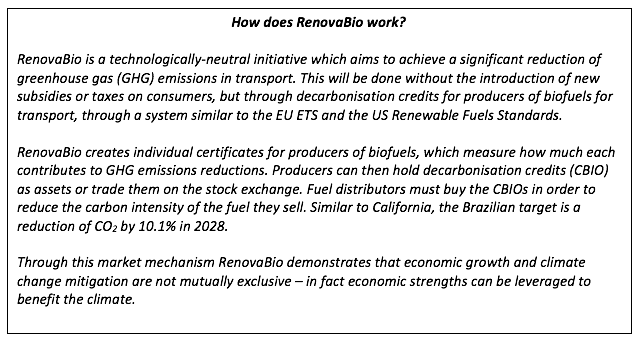
Ahead of COP24, and bearing in mind the need to reduce global warming to less than 2 degrees Celsius, the transport sector must contribute its share, and for that we need a sound biofuels policy as the example of Brazil shows. Transport emissions only account for 10% in Brazil (21% in Europe) but the country is committed to further reduce its carbon footprint and with the new RenovaBio policy framework it is on track to drive the growth of the alternative fuels industry.
Indian sugarcane – setting the right course
Géraldine Kutas — posted 26/09/2018
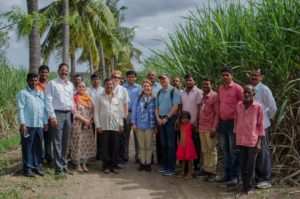
Credit: Joe Woodruff, Bonsucro
In the week of 4 to 8 of September I was invited to the Kingsman Annual Sugar Conference in New Delhi (India) to speak about how sugarcane ethanol can contribute to decarbonizing transport and improving air quality.
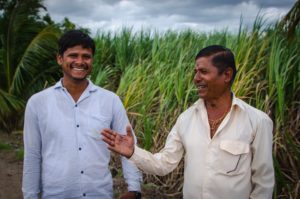
During that week I also had the opportunity to visit a sugarcane farm and a sugar mill in my capacity as Chair of the Board of Bonsucro. I was amazed by the entrepreneurial spirit in the Indian sugarcane sector, its determination to tackle challenges and its willingness to innovate and adopt new technologies. It became very clear to me that India and Brazil, as the two largest sugarcane producers in the world, can learn a lot from each to further improve the sector.
Credit: Joe Woodruff, Bonsucro
The emission challenge
The sheer size and speed of development in India are impressive. It is one of the fastest growing economies in the world, with a GDP growth of 8,2%. Today it is the third largest consumer of energy and this is where India faces challenges. India’s dependency on coal is still at 38%, of which it imports 60%, and its dependency on oil is at 28%, of which it imports 80%. Its transport sector is booming, which is one of the main contributors to local pollution and CO2emissions. Today, India is already the 4thlargest emitter of CO2: emissions grew by 4,6% in 2017. Air pollution is even worse. 14 out of the 15 most polluted cities are in India. Most of all, small particulate matter (pm2.5) is a major health concern.
Can sugarcane make a difference?
India is the 2ndlargest sugarcane producer in the world, with a productivity per hectare that is similar to that of Brazil. The good news is that India is set to make full use of its sugarcane cultivation to the benefit of its emission and its economy.
Today India cultivates sugarcane almost solely to produce sugar. While this provides an important source of income for farmers and sugar mills, it has led to volatility on the national and global sugar markets. Due to the Indian swing production cycles of sugarcane and the guaranteed price for farmers, India periodically produced a sugar oversupply. Fueled through export subsidies this oversupply floods and distorts the global market. In addition to infringing WTO rules this practice is also unsustainable and expensive for the Indian economy.
Ethanol programme
The Indian Government has understood this problem and during my days in India I was amazed how resolutely the country is tackling the issue: India is rolling out a strong ethanol programme with a mandatory ethanol blend of 10% by 2022. The Government has also authorized the production of ethanol from b-heavy molasses and from cane juice – the components that were reserved for sugar production only. Moreover, the Government is working on internal taxes on ethanol products, it has increased the price of ethanol and promotes the expansion of production capacity and 2ndgeneration ethanol. These are all sensitive measures to support the market uptake of ethanol.
This programme will not only decrease the sugar surplus and lead to a more sustainable and flexible income for farmers but also has social and environmental benefits. The use of ethanol in transport will help reduce the emission of particulate matter, it will create jobs in rural areas and help electrification as is happening successfully in Brazil. Thanks to ethanol, India can reduce its import dependence on oil and finally reduce GHG emissions. Brazil stands witness – the country avoided 480 million tonnes of GHG emissions thanks to ethanol in the last 15 years. It’s not the first time India intends to apply an ethanol mandate. Let’s hope that this time it will succeed in applying it rigorously.
Learning from each other
Despite different circumstances, both India and Brazil could both learn from each other’s experiences with sugarcane. Brazil successfully created an ethanol sector which provides a diversified income for sugarcane farmers and millers across production cycles. It managed the introduction of an ethanol high blend (E27) and has experience in operating different mandates. Brazil is also very advanced in adopting the Bonsucro standard and I was happy to see how keen India is to follow suit.
India on the other hand shows an incredible entrepreneurial spirit and is quickly adapting to changes. For example, India is taking the cooperation between farmers and sugar mills to the next level. Through an app, farmers can report on their sugarcane cultivation and harvest and in return the mills can give specific advice to each farmer individually. India is also breaking new ground in developing biogas plants based on vinasse (spent wash), a residue of the ethanol production.
Conclusions
During my days in India I got the impression of a country that is determined to set its sugarcane sector on the right course. The ethanol programme is the right tool to ensure that the sugarcane sector is competitive and sustainable and can escape production cycles with the inherent risk of oversupply.
Brazil can share some best practices on how to succeed on that path. At UNICA, we are committed to cooperate more with our Indian peers to make that programme a success. However, public support to export must cease. The announcement of new subsidies a few days ago provoked another fall in international sugar prices. Export aids are an easy solution to get rid of surpluses but they are highly distortive for international trade. Continuing to support the sector through export subsidies is definitely not an option and will be challenged at the WTO if this policy continues.
Advanced Biofuels Could Play a Larger Role Greening America’s Transportation Sector
Leticia Phillips — posted 17/08/2018
The Renewable Fuel Standard (RFS) celebrates its thirteenth anniversary this month and remains a foundational energy policy that enhances America’s energy security and improves the environment. Brazilian sugarcane biofuel producers are proud of the modest but important role they have played helping make the RFS a success, especially when it comes to supplying the U.S. with clean, advanced biofuels that offer superior environmental benefits.
The Environmental Protection Agency has proposed new RFS volume requirements for 2019, and there are certainly elements of the proposal that deserve broad support. At the top of our list is increasing the advanced biofuel requirements by 12 percent to 4.88 billion gallons in 2019 and recognizing that Brazilian sugarcane ethanol can supply at least 100 million gallons of that amount.
But EPA could also strengthen the proposal in ways that would encourage advanced biofuels to play a greater role greening the U.S. transportation sector. Here are two suggestions that Brazilian sugarcane producers recommend in our official comments submitted to the Agency today.
Expect More from Advanced Biofuels
We think the 2019 volume requirements should be even higher. Because under the right market conditions and with appropriate regulatory incentives, the advanced biofuel industry – including Brazil’s sugarcane industry – could produce more.
EPA designates sugarcane ethanol from Brazil as an advanced biofuel because it reduces greenhouse gases by at least 61 percent compared to gasoline. Brazil currently produces more than seven billion gallons of sugarcane ethanol each year, and typically makes between 400 million and 800 million gallons of its annual production available for other countries to import.
However, Brazil could export considerably greater volumes of sugarcane ethanol to the United States. In the past, Brazil has exported a record of 1.35 billion gallons to the United States in one year (2008) and 164 million gallons in one month (September 2008). At a mere 100 million gallons, EPA is underestimating the volume of sugarcane ethanol that can be made available to the U.S. market under the right conditions.
Create New Incentives for the Cleanest Fuels
One way EPA could help nudge those market conditions into a more favorable posture is by creating an incentive program that would give extra credit to the most climate-friendly biofuels. The RFS statute clearly grants EPA this authority, but to date, the Agency has not exercised it.
As a potential model, EPA need look no further than its program for regulating greenhouse gas emissions from motor vehicles. Under these regulations, vehicle manufacturers are required to meet fleet-wide average emission standards. The fleet-wide average is generally determined by taking the weighted average of the emissions associated with each vehicle produced by a manufacturer. However, EPA regulations create an incentive multiplier for electric and other advanced vehicles, which allows manufacturers to double-count these vehicles for purposes of determining their fleet-wide average.
Even though the Clean Air Act does not specifically contemplate such a multiplier, EPA determined it could create such an incentive to “promote the penetration of certain ‘game changing’ advanced vehicle technologies.”
We encourage EPA to create a similar incentive for game-changing advanced biofuels that exceed minimum RFS requirements.
Continuous Improvement
Over the past six years, nearly 1.3 billion gallons of sugarcane ethanol imported from Brazil flowed into American vehicles. During this time, sugarcane ethanol comprised only one percent of all renewable fuels consumed by Americans but has provided more than six percent of the entire U.S. advanced biofuel supply. Brazilian sugarcane producers take pride in this track record of success and are eager to contribute even more.
The RFS is now a teenager, and EPA must continue to play a thoughtful role guiding the program through unavoidable growing pains. We hope the Agency will stay laser focused on fostering the development of advanced and cellulosic biofuels.
EU-Mercosur negotiations round: crunch time
Géraldine Kutas — posted 09/07/2018
Since December last year the closing of the EU-Mercosur trade negotiations has continually seemed tantalizingly just around the corner, but certain obstacles have proved stubborn in rearing their heads, stretching out the talks until the middle of 2018. Hope has sprung eternal, and it would be tempting to invest in the negotiation round starting on 9 July the ambitions of all parties to finally arrive at the end game of a full and final agreement between the trading blocs. And not a moment too soon, if we consider that talks have been ongoing, on and off, already for some 20 years…
However, what has been left for what is hopefully the end game is not just minor details but also some critically important demands of the Mercosur countries, including improved market access for sugar and ethanol. Particularly for Brazil the importance of these products cannot be overestimated. The sector supports more than 1m jobs, the industry is highly competitive and the country invests a lot on technological development in the bio-economy.
With its tough negotiation strategy the EU has managed to marginalize these key elements until the 11th hour. In that way the EU has ensured that its offensive interests are largely satisfied before it has to make concessions. This has proved successful in securing far-reaching market opening from the Mercosur bloc. This may now make it easier for the EU to sell in the further concessions now needed to secure a deal to its own constituents – in particular the European agricultural lobby.
If this has been the EU’s strategy, it’s a risky one. With so many dossiers of the negotiations completed, Mercosur’s main remaining leverage is to walk away from a deal altogether if it doesn’t feel an adequate quid pro quo. While everyone wants a deal, Mercosur has also been clear that it won’t accept a bad deal, and that risk is very real. Mercosur negotiators need to secure clear wins on issues of fundamental importance to them if a deal is to be secured. The Brazilian negotiator has made this perfectly clear in the past, unambiguously stating that he cannot come home without a deal that also includes significant movement on sugar and ethanol.
What the EU has offered on sugar so far is completely unacceptable. A €98/tonne tariff within a quota of 100,000 tonnes is a nonsense. It will not lead to any improved market access, because it distorts the market for Brazilian producers. The tariff is set far too high for Brazilian producers to be able to compete with their European counterparts in EU markets. Even if a tariff similar to the one offered to Mexico was proposed, it would be simply considered as a non-offer.
In view of the many concessions the Mercosur countries have made to the EU – including market access for cars and industrial goods as well as the protection of hundreds of geographical indications for its agricultural industry – it is high time that the EU make some significant concessions itself if it’s serious about securing a trade deal that is workable for both parties.
As MEP Salafranca has said, free trade agreements are also about securing peace and development. But the EU’s instinctive reaction is to close the door to its trading partners that are highly competitive – which is worryingly reminiscent of the decidedly protectionist practices of the US that is causing a global tariff war.
In these troubled times when the entire rules-based trading system is at risk, securing this deal is about much more than mere market access. It is about the EU sending an unambiguous signal that it really cares about and believes in a fair and free trade deal that will be a tide that raises all boats – not just European ones. This is now crunch time in these lengthy negotiations: the balls is clearly in the EU’s court to get a deal over the line and it needs to step up to its responsibilities.
Driving bioenergy in transport – consensus at the UNICA Forum
Géraldine Kutas — posted 25/06/2018
The UNICA Forum has once again proved its standing as one of the most important events on bioenergy and transport. More than 600 people attended this year’s edition in São Paulo on 18 June 2018. Participants included eight candidates in Brazil’s Presidential race as they gear up for the elections on 18 October 2018. The discussions covered issues ranging from trade distortions to biofuels but the core topic was RenovaBio, Brazil’s flagship programme in the fight against climate change.
Only last week the Brazilian government approved the target of 10.1% reduction in transport emissions by 2028, and RenovaBio is a key element to reaching that target. Consequently, this new mechanism was on top of everybody’s mind at the UNICA Forum and it was encouraging to see the eight presidential candidates support the initiative and praise thetechnology neutrality that will enable the market to choose the best-performing technologies. Some of the candidates even want to go beyond RenovaBio. With RenovaBio Brazil is leading in the decarbonisation of transport through a carbon trading scheme. To keep this leadership position, it is important that the programme be fully and well implemented.
Transport emissions reductions is not a new territory for Brazil. Thanks to its flex-fuel cars and the use of sugarcane ethanol Brazil reduced its carbon emissions in the transport sector by more than 400 million tonnes in 13 years, that’s almost five times the performance of the EU. This enthusiasm for vehicles combining two low-carbon technologies – renewable electricity and ethanol – was another theme of the event, of which the exhibition of Toyota’s first hybrid-flex vehicle was certainly a highlight. Built on the Prius platform, the car can run on 100% electricity, 100% ethanol or any mix of the two, minimising CO2emissions.
Throughout the debate candidates overcame political differences ahead of October’s presidential elections and found common ground on the economic and social importance of the Brazilian sugarcane sector. This is not surprising, as it provides direct employment to more than 800,000 people and generates revenues equivalent to 2% of the country’s GDP, while contributing to the positive trade balance. Similarly, participants agreed on sugarcane’s role as a key instrument towards a low-carbon economy. Despite the economic crisis, the share of Brazils’ renewables has increased and the panel recognised the role of first- and second-generation ethanol, bioelectricity and biogas in this achievement.
Trade distorting measures recently adopted by countries including China, India and Pakistan have had significant impact on Brazil, which exports two-thirds of its sugar production. At the same time, Brazil is watching closely how Thailand and the EU are reforming their sugar sector. The candidates tackled these issues in an informed way, demonstrating their grasp of the gravity of the potential impact. With an eye on domestic issues, they also debated the optimum level of administrative intervention from government, and how this affects predictability around the future energy mix. This, along with discussion of the cost of capital, hit at the key point of ensuring continued investment in Brazil’s bio-economy. As one of the country’s greatest economic strengths, the bio-economy can mitigate climate change while promoting energy security.
The UNICA Forum showed that the bio-economy will continue to be a priority for Brazil far after the presidential elections, whoever the winner.
Our Authors
Eduardo LeãoExecutive Director
Emily ReesRepresentative for Europe
Leticia PhillipsRepresentative, North America
SIGN UP FOR EMAIL UPDATES
Join our email list and receive the latest news and updates from UNICA in your inbox.